
When students plan an international service experience, one assumption comes up again and again:
Keep it short.
Students are busy. International travel is expensive. Academic calendars are complicated. Surely one week is easier to sell than three or four.
But the history of University of Delaware MEDLIFE suggests something different.
Over multiple years, Delaware students committed to unusually long international experiences — including a nearly month-long journey through Ecuador and Peru and another group of roughly 40 students spending almost four weeks in Tanzania.
Their example offers an important lesson for experiential education:
Students do not necessarily want the shortest experience possible. They want an experience worthy of their time.
Longer Should Mean Deeper — Not Simply More Days
The central insight from what we call the Delaware Model is simple:
A three- or four-week Service Learning Trip should not feel like a one-week trip repeated several times.
It should become a different kind of experience.
In 2015, internal MEDLIFE records document a University of Delaware group of 31 travelers moving through Tena, the Galápagos, Riobamba, Peru, Cusco, the Sacred Valley, and Machu Picchu over roughly 24 days in the field.
Students did not spend the entire period doing the same activity.
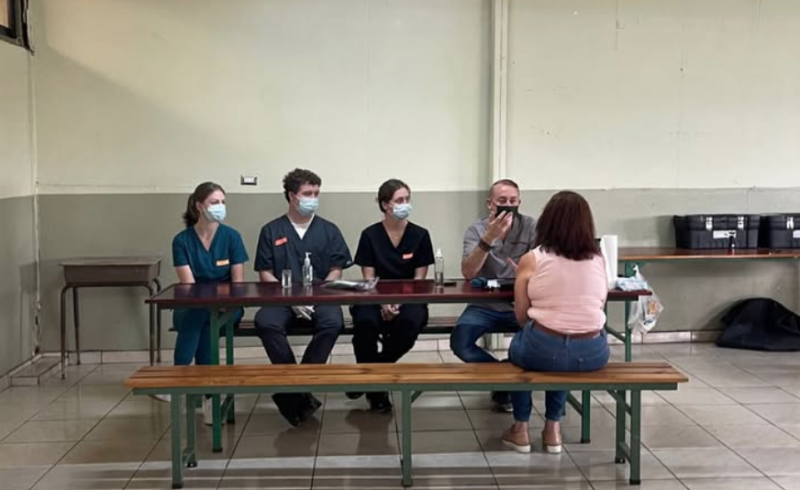
They participated in clinics, community exposure, rainforest experiences, cultural travel, and multiple geographic environments across two countries.
That variety is what made the length meaningful.
The value was not simply that students stayed longer.
It was that each additional part of the journey gave them something new to compare, question, and understand.
The first impression is rarely the full story
Short experiences can be powerful.
But they also create a risk: students may leave while their first interpretation of a place is still their only interpretation.
One underserved community can accidentally become “what poverty looks like.”
One clinic can become “how healthcare works here.”
One conversation can become a generalization about an entire country.
Extended immersion creates more opportunities for those first impressions to be challenged.
A rural community looks different after visiting an urban one.
An Amazonian environment creates different questions than an Andean community.
A health intervention looks different once students also understand housing, transportation, agriculture, infrastructure, education, and local leadership.
That process matters because MEDLIFE’s educational model is not designed simply to expose students to inequality. It is designed to help students develop humility, systems thinking, respect for local knowledge, and a greater ability to understand complexity.
More time can support that learning — but only when the additional time is intentionally designed.
Service was only one part of the experience
One of the strongest aspects of the Delaware Model is that it combined elements often treated as separate products.
Students participated in healthcare and health education.
They encountered community-development work.
They traveled through distinct cultural and geographic environments.
They experienced highly memorable destinations such as the Galápagos, Cusco, the Sacred Valley, and Machu Picchu.
And they traveled as a large cohort.
Later, Delaware students brought the same appetite for immersion to Tanzania. A University of Delaware Honors report described traveling to Moshi for “almost four weeks” with about 40 other Delaware students through MEDLIFE. MEDLIFE records from the same period describe a substantial water and sanitation initiative involving bio-sand filters, community education, families, teachers, and nursery schools.
That example is especially important.
It shows that longer programs can create room not only for more travel, but for deeper development work.
Culture and Travel Do Not Have To Compete with Service Learning
International service programs sometimes treat cultural travel as something separate from the “serious” part of the experience.
But well-designed field education does not have to make students choose between learning and experiencing the country.
Culture, geography, environment, and history are part of understanding place.
Seeing the Amazon can create questions about geography, development, infrastructure, and environmental systems.
Visiting the Galápagos can introduce conversations about conservation and human–environment relationships.
Traveling through Cusco and the Sacred Valley gives students a different perspective on history, Indigenous identity, tourism, economics, and contemporary Peru.
The key is intentionality.
A destination should not simply be an add-on designed to fill free time.
It should contribute to a larger educational journey.
Cohort Matters Too
The Delaware groups were unusually large.
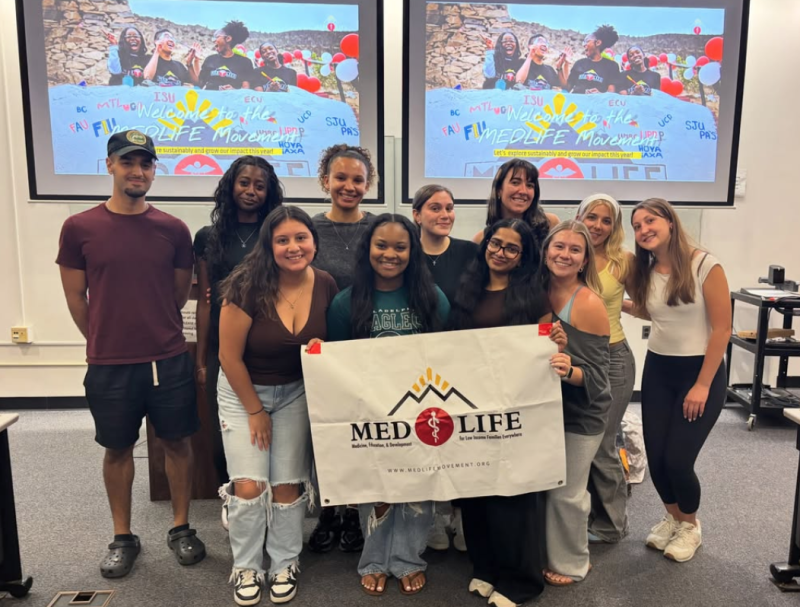
Thirty or forty students traveling together over several weeks creates something that a shorter experience may struggle to replicate: cohort identity.
Students share unfamiliar situations, conversations, challenges, discoveries, and reflections.
They develop stronger relationships with one another.
They have time to move beyond introductions and begin functioning as a group.
That matters not only during travel but after students return home.
A powerful shared experience can strengthen campus chapters, future leadership, peer recruitment, and continued involvement in service.
The Delaware story also highlights the importance of student ownership.
April Gulotti, one of the student leaders most closely associated with the model, helped organize complex travel and later served as University of Delaware MEDLIFE president, coordinating additional experiences for students.
Students were not simply customers consuming a trip.
They helped build it.
Why University Calendars Matter
Delaware’s academic calendar also offers a useful lesson.
The university has historically offered a Winter Session between traditional semesters, creating a natural window for extended experiences without requiring students to miss an entire semester.
Many universities have similar structures:
January terms.
Winter sessions.
May terms.
Maymesters.
Long winter breaks.
Short-term study-abroad periods.
These academic windows can make two-, three-, or four-week field experiences much more realistic.
Instead of asking students to squeeze international learning around traditional coursework, universities can design travel around periods already intended for intensive education.
What a Modern Extended Service Learning Trip Should Look Like
The Delaware Model suggests that the strongest extended experience should combine several elements:
- meaningful service and community-development work;
- multiple communities or environments;
- interaction with local professionals and community leaders;
- cultural and environmental learning;
- guided reflection;
- strong student leadership;
- and a clear progression from arrival to final synthesis.
The length alone is not the product.
Immersion is the product.
That distinction matters.
A longer trip is not automatically a better trip. More days can simply create more logistics, more expense, and more tourism if there is no educational purpose behind them.
But when each week introduces a new perspective, a new environment, a new relationship, or a new question, time becomes an educational tool.
The Bigger Lesson From Delaware
University of Delaware students demonstrated something MEDLIFE should continue to remember:
Young people are willing to commit significant time to meaningful field experiences.
But they need to understand why that time matters.
Students do not need four weeks of the same activity.
They need a journey that evolves.
Service can introduce a community.
Development work can reveal systems.
Local professionals can complicate assumptions.
Culture and geography can deepen context.
Reflection can help students connect what they are seeing to what they thought they knew before arriving.
And enough time can allow the novelty of travel to fade so that deeper learning begins.
The lesson from Delaware is therefore not:
Make Service Learning Trips longer.
It is:
Make the experience worthy of being longer.
To learn how you can join a MEDLIFE Service Learning Trip, fill out the form below today!