Some things can be taught in a lecture.
Others have to be encountered.
Students can read about inequality.
They can study healthcare systems.
They can debate international development, sustainability, conservation, foreign aid, and social determinants of health.
But a field course asks something more difficult:
What happens when the concepts leave the page and become people, places, institutions, and competing perspectives?
That question sits at the heart of the field-study tradition Professor Thom Meredith helped develop at McGill University — and it later influenced how MEDLIFE’s founder, Nick Ellis, thought about experiential education.
The Field Itself Can Become Part Of The Curriculum
As an undergraduate at McGill, Nick participated in the Panama Field Study Semester with Professor Meredith.
Years later, Nick described the experience as a cornerstone of his educational development.
The important lesson was not simply that international travel is educational.
Travel alone does not guarantee learning.
What mattered was how the experience was designed.
Students were expected to examine development from multiple angles: communities, government, business, environment, natural resources, inequality, culture, and history.
Instead of being given a simple answer about what was right or wrong, students encountered complexity.
Economic development could create opportunity and environmental pressure.
Conservation could protect ecosystems while changing local livelihoods.
Government policy could solve one problem while creating another.
Local knowledge could challenge the assumptions of outside experts.
The student’s role was to observe, listen, compare, and eventually decide what the evidence suggested.
That is a very different educational model from simply visiting a place.
Understanding should come before intervention
One idea from that experience became particularly important:
Understand complexity first. Act second.
That principle is now recognizable across MEDLIFE’s educational philosophy.
MEDLIFE asks students to approach communities with humility, understand history and context, listen across perspectives, identify root causes, recognize legitimate local leadership, and think in systems rather than isolated activities.
The objective is not to turn students into experts after a short trip.
It is to help them become better learners.
Field education works precisely because students discover how incomplete their original mental models can be.
The former student eventually returned as an educator
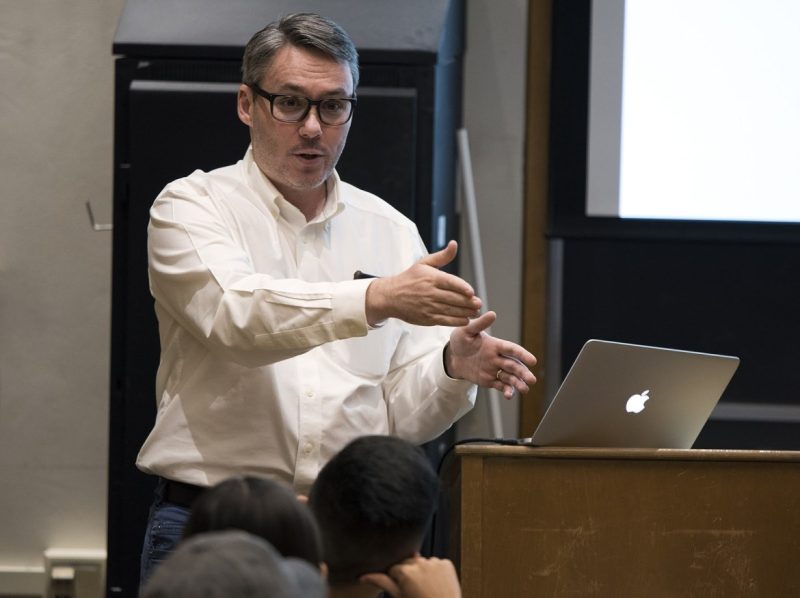
Years after Panama, Nick returned to McGill’s field-study environment as part of the teaching team for a credit-bearing East Africa course.
The course, GEOG 493: Health and Environment in Africa, combined lectures, field trips, interviews, participatory learning, readings, quizzes, oral evaluation, class participation, and final assessment.
The course was structured around three broad stages.
First came the problems.
Students explored colonialism, foreign aid, debt, neoliberalization, disease burden, climate change, structural violence, and access to healthcare.
Then came potential solutions and case studies.
Students examined tuberculosis, HIV/AIDS, infrastructure, community collaboration, and different public-health interventions.
Only after that did they move toward evaluation and critique.
What counts as sustainable?
What counts as success?
What is scalable?
What is equitable?
Who should lead?
That sequence matters.
Students were not taught to jump directly from “there is a problem” to “here is the solution.”
They had to understand the system first.
Different Places Teach Different Lessons
The course moved through multiple locations in Kenya.
Each site was tied to different academic questions.
At Mount Kenya, students encountered topics including history, foreign aid, brain drain, and disease burden.
In Naivasha, the curriculum turned toward climate change, structural violence, and healthcare access.
In Maji Moto, students explored community collaboration and public-health case studies in a Maasai setting.
Later sessions asked students to evaluate sustainability and what successful intervention actually means.
This comparative movement is one of the strongest features of immersive education.
One community can easily become “the story.”
Multiple communities force students to notice difference.
Rural is not urban.
Public systems are not private systems.
One cultural group does not represent another.
One development strategy may not transfer neatly to another setting.
The student has to stop generalizing and start comparing.
Seeing Is Not Enough
Another important lesson from the McGill model is that field experience becomes academic when students are expected to do something intellectually with what they saw.
GEOG 493 used formal assessment.
Students completed readings.
They participated in discussions.
They took quizzes.
And a surviving final exam required students to draw on both academic readings and field visits when designing and evaluating public-health interventions.
That is a crucial distinction.
A student who visits a community has had an experience.
A student who must compare that experience with theory, defend an interpretation, identify contradictions, and revise an argument has participated in education.
MEDLIFE’s own educational philosophy similarly emphasizes reflective sense-making: exposure becomes more valuable when students are helped to process what they saw and connect it to history, systems, policy, and their own assumptions.
Local Voices Make The Classroom More Complicated — And Better
Good field education also depends on hearing from more than one type of stakeholder.
Community members.
Physicians.
Nurses.
Government officials.
Local organizations.
Businesses.
Families.
Traditional leaders.
Educators.
Each sees a different part of the system.
A public-health challenge can look very different depending on where someone stands within it.
That is why listening to multiple perspectives is not an optional cultural activity.
It is a method of analysis.
The more voices students hear, the harder it becomes to maintain an oversimplified explanation.
And that is precisely the point.

Immersion Requires More Planning, Not Less
Field education may look spontaneous from the outside.
But the McGill experience shows that strong immersion depends on careful preparation.
Faculty need to understand the learning objectives.
Local partners need to know how the students will engage.
Sites need to be chosen for a reason.
Readings need to connect to locations.
Interviews need to be intentional.
Reflection needs to happen while experiences are still fresh.
Risk and logistics need to support, rather than interrupt, learning.
Immersion is not improvisation.
A powerful field course often requires more design than a traditional classroom.
From McGill Field Studies to MEDLIFE
By 2019, the connection between this educational tradition and MEDLIFE had become explicit.
Professor Meredith and MEDLIFE began discussing whether MEDLIFE’s own Leadership Corps could support academic credit.
The concept under discussion included a possible semester-long course ending in an immersive MEDLIFE experience that functioned almost like a practical final exam.
The proposed model did not ultimately launch before COVID disrupted international programming.
But the idea was significant.
The field experience was not being treated as an extracurricular add-on.
It was being considered as the place where academic learning could be tested against reality.
The Eight Principles Of Meaningful Field Education
The Meredith–McGill tradition offers a useful framework for designing better experiential learning:
- Prepare students before they arrive.
- Choose places because they teach something.
- Expose students to multiple voices.
- Compare different settings.
- Connect theory to observation.
- Reflect while the experience is happening.
- Require students to synthesize what they learned.
- Build the experience with local partners.
These principles can apply whether or not a student receives academic credit.
The point is not that every MEDLIFE participant needs to enroll in a university course.
The point is that every strong field experience can benefit from educational architecture.
The Student Should Return With Better Questions
The deepest value of field education may not be that students return with answers.
It may be that they return knowing how much harder the questions actually are.
Why does healthcare fail to reach certain populations?
Who defines what successful development looks like?
What role should outsiders play?
How do history and policy shape present-day outcomes?
Which solutions work in one context but fail in another?
What does local expertise see that an outsider may miss?
These are not questions that fit neatly into a photo caption.
They require preparation, observation, humility, comparison, and reflection.
That is the lasting insight of the Meredith–McGill Model:
The field becomes transformational when students are asked to do more than see.
They must listen.
Question.
Compare.
Think.
Revise.
And make sense of what they have learned.
To learn how to experience field education through MEDLIFE, fill out the interest form below.