What if the most important part of an international service experience happened before students ever boarded a plane?
For years, the traditional model of student service abroad has followed a familiar sequence: join an organization, register for a trip, attend a pre-departure orientation, and travel.
Students at UC Berkeley MEDLIFE built something different.
Their approach connected academic preparation, global health education, medical and conversational Spanish, cultural learning, clinical simulations, critical reflection, local service, and an extended field experience in Peru.
The result was more than preparation for a trip.
It was an educational model in which the trip became the field component of a larger learning experience.
And more than a decade after the original course was documented, the ideas behind it remain highly relevant to how MEDLIFE thinks about ethical service learning today.
The Trip Was Never Supposed To Stand Alone
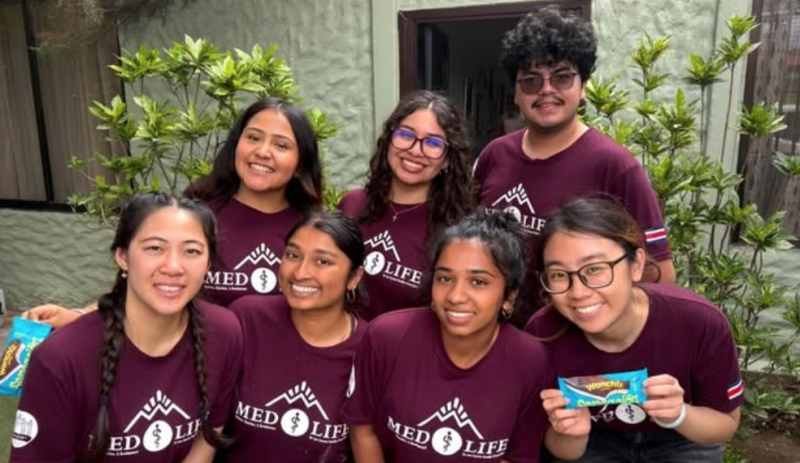
In 2012, UC Berkeley students were already teaching a formal course connected to MEDLIFE through Berkeley’s DeCal program.
The class, listed as PH 98/198, introduced students to global health and prepared them for their field experience. But its expectations went well beyond basic travel logistics.
Students studied global health and sustainability. They discussed South American culture. They learned medical and conversational Spanish. They practiced different clinic stations through workshops and role-playing. They completed reflections, took exams, and even participated in practical simulations designed to evaluate how they communicated with a patient.
The difference is important.
Instead of:
Join a club → sign up for a trip → travel
Berkeley created something closer to:
Study the context → examine global health and sustainability → learn relevant language → practice communication and field skills → reflect critically → travel → apply what you learned
That changes the role of the student.
The objective is no longer simply to arrive somewhere and “help.” Students arrive having already begun asking harder questions about context, ethics, power, sustainability, and their own limitations.
Preparation changes what students are able to see
Field experience is powerful partly because reality is more complex than a classroom case study.
Students can learn about social determinants of health in a lecture. They can read about barriers to healthcare access. They can study poverty, infrastructure, migration, and inequality.
But encountering these systems in real communities adds another layer of understanding.
MEDLIFE’s educational philosophy is built around this combination of structured exposure and reflective sense-making. Field education can challenge simplified mental models, while reflection helps students connect what they see to history, policy, institutions, and systems. The objective is not to produce an emotional reaction or a “savior” mentality. It is to cultivate humility, discernment, and more sophisticated systems thinking.
Berkeley’s model anticipated much of that philosophy.
Students did not simply study clinical activities. They were asked to think critically about what makes international service sustainable and worthwhile.
That matters because meaningful global health education should teach students not only what happens, but why it happens.
Cultural humility matters more than arriving with answers
Over time, Berkeley’s course evolved to explicitly emphasize both cultural competency and cultural humility.
The distinction matters.
Cultural humility does not suggest that a short course or international experience makes someone an expert in another community. Quite the opposite.
It asks students to remain curious, self-aware, respectful, and willing to learn from people whose lived experience and local expertise exceed their own.
That principle is central to MEDLIFE’s broader approach.
Students participating in MEDLIFE programs work alongside systems that are locally led. Healthcare services are delivered by local professionals who understand the language, culture, referral pathways, and healthcare system. Community development is built through local leadership and long-term relationships rather than outsiders arriving with predetermined solutions.
Students therefore do not need to arrive pretending to have all the answers.
They need to arrive prepared to listen.
Learning the Language Is Part of Learning Respect
Another distinctive feature of Berkeley’s model was recurring Spanish education.
Students completed Spanish assignments, learned both conversational and medical vocabulary, and were assessed on their progress.
The expectation was not fluency.
The value was reducing unnecessary distance between students and the people they would meet while helping students understand the importance of communication in healthcare and community work.
Even basic language preparation can reinforce a larger lesson: entering another person’s community requires effort from the visitor.
It shifts the expectation from everyone should accommodate me to I have a responsibility to prepare myself to engage respectfully.
Simulation Gives Students A Chance To Learn Before The Stakes Are Real
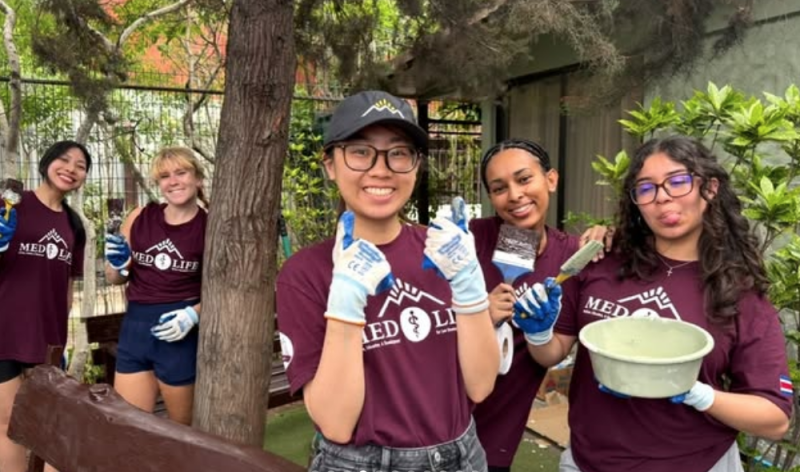
Berkeley also used workshops, role-playing, and practical assessments before students entered the field.
Students learned about activities involving general medicine, vitals, dentistry, pharmacy, laboratory work, education, and community development. One practical example described in the original syllabus involved interacting with a simulated patient and being evaluated not only on relevant questions, but also on whether the patient felt comfortable.
That emphasis reveals something important.
Readiness is not simply knowing what task comes next.
It includes communication, role clarity, teamwork, boundaries, and knowing when the appropriate action is to defer to a trained local professional.
MEDLIFE does not believe academic preparation gives visiting students authority beyond their training. Service remains under the direction of qualified professionals and community partnerships.
Preparation should therefore make students more aware of their limitations, not less.
Ethical Service Learning Should Include Critical Questions
One of the most valuable elements of the Berkeley model may be that students were not expected to accept international service uncritically.
They discussed sustainability and the limitations of brigade-style service. Later versions of the program explicitly addressed voluntourism and cultural humility.
That kind of discussion is essential.
Short-term international service has real risks when students become the center of the experience, when local expertise is displaced, or when communities provide educational value to visitors without receiving meaningful value in return.
MEDLIFE’s model is designed around a different idea: education through service, with local professionals and community leaders remaining central to the work. Students learn through participating in efforts that are part of longer-term systems rather than acting as temporary substitutes for those systems.
The point is not to avoid difficult conversations about international service.
The point is to prepare students to have them.
Why Two Weeks Can Mean More Than Simply “More Days”
Berkeley also demonstrated the potential of pairing this preparation with a two-week field experience.
But a better two-week Service Learning Trip should not simply be a one-week itinerary repeated twice.
Additional time creates the opportunity for more purposeful learning: deeper exposure to community development, conversations with local professionals and community leaders, language practice, reflection, cultural and historical education, and stronger connections between classroom concepts and what students observe in the field.
The important question is not:
How long is the trip?
It is:
What are students being prepared to understand while they are there?
The Berkeley Lesson: Preparation Makes Field Experience More Meaningful
Perhaps the most important insight from Berkeley’s model is remarkably simple:
A Service Learning Trip should not begin at the airport.
Preparation matters.
Language matters.
History matters.
Cultural humility matters.
Understanding systems matters.
Reflection matters.
And the work students do after returning home matters too.
MEDLIFE believes field education can help students develop capacities they may carry into future careers: humility, respect for local knowledge, systems-level thinking, reflective decision-making, and greater comfort with complexity. The long-term objective is not to claim that a short experience solves inequality. It is to help shape future professionals who approach complex problems more responsibly throughout their careers.
That is why the strongest version of service learning is not simply about traveling somewhere to do something.
It is about learning how to see, how to listen, how to question, and how to contribute responsibly.
From a Berkeley innovation to a model others can learn from
UC Berkeley MEDLIFE deserves explicit credit for developing and sustaining this approach through generations of students, faculty sponsors, and chapter leaders.
MEDLIFE’s opportunity is not to claim the model as its own.
It is to learn from it.
Berkeley showed what can happen when a student organization treats an international experience as part of a serious educational process rather than a stand-alone volunteer trip.
The next step is making that kind of preparation easier for more universities, educators, and students to adopt.
Because ultimately, the goal is bigger than creating a better trip.
It is creating better-prepared students who understand that meaningful change requires humility, listening, partnership, systems thinking, and long-term commitment.
And that may be the most valuable thing students bring home with them.
To learn how you can start or join a MEDLIFE chapter on your campus, fill out the form below!