Clear communication between patients and providers is the basis of safe, accurate, and fair care. When they don’t share a language, important information can get lost, and patients may leave without understanding their diagnosis or their instructions. For future physicians, nurses, and public health workers, language barriers in healthcare are worth learning how to handle early. The habits you build now carry into every stage of training and practice, contributing to the quality of care you’re able to offer.
Why Language Barriers In Healthcare Are Something To Overcome
Language differences aren’t just minor misunderstandings. They can affect whether patients follow treatment plans, and whether they trust the health system at all.
In one study of six US hospitals, when adverse events happened, patients with limited English proficiency were more likely to be physically harmed than English-speaking patients (about 49% versus 30%). Their adverse events were also more often caused by communication problems. That makes language barriers in healthcare a severe patient-safety issue.
That’s why communication should be treated as a vital part of patient care, not just an extra. It means not relying on gestures or on untrained family members, especially children, to interpret. Instead, clinicians should either work with trained medical interpreters, or familiarize themselves with the languages most spoken by the people living in their area.
Practical Strategies For Pre-Health Students
You can start building these skills well before medical or nursing school. Some things you can practice in class now; others you’ll use once you’re in clinical training:
- Learn medical terms in other langauges, and know your limits. Figure out what languages you’ll be most likely to encounter in the area you’ll be working and get familiar. Start with greetings, conversational phrases, and basic vocabulary for describing symptoms. Even a greeting in a patient’s language can build rapport. But basic proficiency isn’t a substitute for a trained interpreter, and anything clinical needs one.
- Learn how to work with interpreters. Speak to the patient, not the interpreter, and keep eye contact with the patient. Use short sentences and plain language instead of jargon.
- Use visual tools. Translated anatomy charts, visual pain scales, and symptom diagrams support what’s being said. They work best alongside an interpreter, not in place of one.
- Use the teach-back method. Ask patients to explain instructions in their own words. It’s one of the simplest ways to check understanding, whatever language you’re working in.
Cultural Humility Alongside Language Skills
Fluency alone isn’t enough. The way people talk about illness varies across cultures, and so does who makes health decisions in a family. Good communication depends on understanding those differences.
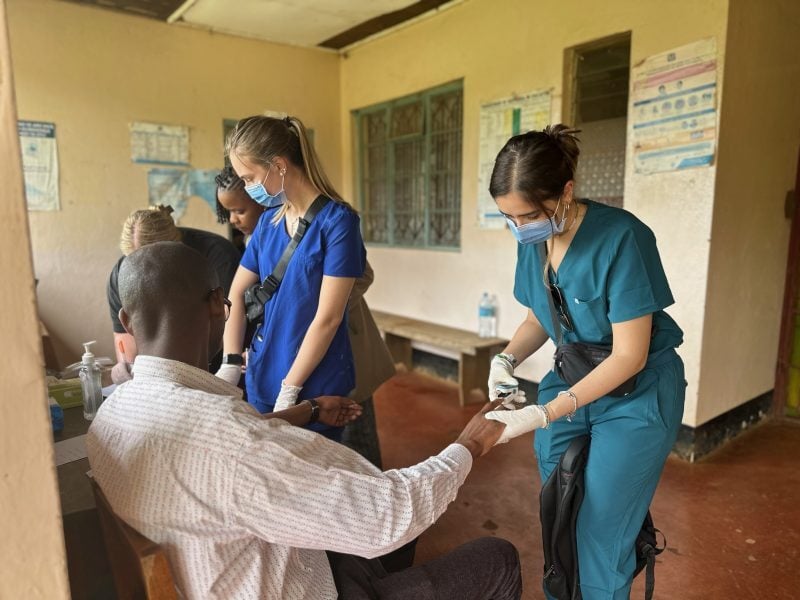
On a MEDLIFE Service Learning Trip, you can spend time with local health workers and community members in countries like Peru, Ecuador, or Tanzania. Seeing how trust gets built in a community shows why listening and respect matter as much as vocabulary. It also teaches you to approach people with curiosity instead of assumptions.
Preparing For Practice
Language barriers in healthcare won’t disappear, and no single course will prepare you for all of them. What you can do now is start learning a language, practice listening, and build the habit of working through cultural and language barriers.
If you want to see how communication works in community health settings, consider exploring MEDLIFE’s Service Learning Trips. To learn how to get involved, fill out the interest form below!