
When we start to analyze public health disparities, the conversation typically centers on drug costs, hospital bed shortages, or medical staffing. However, physical terrain plays an equally decisive role in rural and peri-urban regions across Peru, Ecuador, and Costa Rica. Unpaved, mountainous landscapes act as a severe healthcare barrier for thousands of individuals living in informal expansion zones.
Without basic roads or stable steps, the simple act of leaving home to seek treatment becomes a treacherous journey that can lead to further injury and complications. Understanding how physical geography dictates medical equity is essential for designing sustainable global health solutions.

Physical Isolation in Informal Settlements
In many South American cities, rapid urban growth forces low-income families to construct homes high up on steep, unpaved hillsides on the outskirts of urban centres. These communities, often built without municipal planning, lack paved roads, street lighting, sanitation, and public transportation. Because of this, healthcare disparities become further exacerbated.
When it comes to health care geography, terrain is rarely just an inconvenience, it is a direct threat to life:
- Emergency Vehicle Blockades: Ambulances and emergency responders cannot physically climb unpaved, vertical dirt paths, leaving critically ill or injured residents completely stranded.
- Elevated Risk for Vulnerable Patients: Elderly individuals, pregnant women, and people with physical disabilities face extreme danger navigating loose dirt, rocks, and mud. A single slip on a steep incline can cause severe injury.
- Preventative Care Barriers: The sheer physical exertion required to hike down, and back up, a mountain discourages residents from seeking early diagnostic care, turning manageable conditions into life-threatening emergencies.
The Seasonal Escalation of Terrain Disparities
The physical challenge shifts from difficult to life-threatening during rain seasons. Heavy downpours turn unpaved hillside paths into unstable mudslides, completely cutting off entire neighborhoods from urban centers.
For patients living with chronic conditions like diabetes or hypertension, accessing health care during these months becomes virtually impossible. Prescription refills are delayed, routine checkups are skipped, and minor infections escalate because the physical path to a clinic is unsafe to travel.
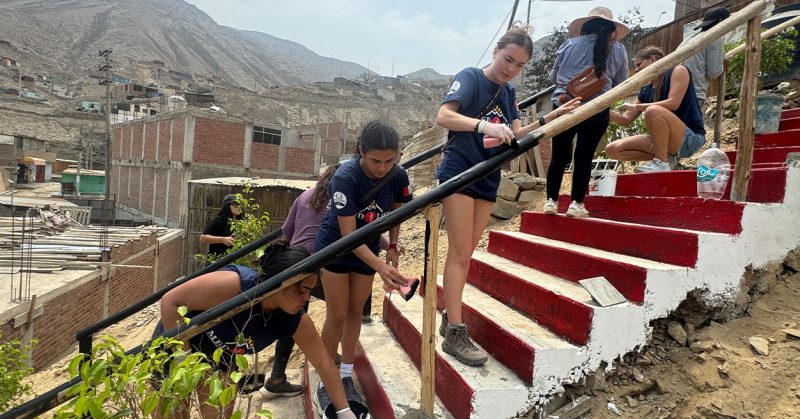
Infrastructure as Preventative Medicine
Overcoming this physical healthcare barrier requires expanding our definition of public health interventions. Medical care cannot begin at the clinic door if patients cannot safely reach the clinic in the first place.
Building reliable infrastructure, such as concrete staircases with handrails, retaining walls, and paved drainage channels, directly addresses the social determinants of health and creates pathways for people to access the care they deserve. Concrete staircases transform a dangerous, one-hour climb through mud into a safe, ten-minute walk. By stabilizing hillsides, communities gain safe passage to visit doctors and emergency medical resources.
Re-Engineering Health Equity
True health equity requires addressing the environment where people live, work, and travel. Recognizing unpaved terrain as a fundamental healthcare barrier allows global health organizations to partner with local communities to build lasting physical solutions. Constructing staircases alongside running mobile health clinics ensures that physical geography no longer dictates who receives medical care and who is left behind.
To learn how you can assist in creating better access to medical care in underserved areas across Latin America and Africa, fill out the interest form below or download our brochure!