When students are evaluating the value of international field education opportunities, it’s common to want to keep itineraries short to fit tight academic and personal schedules. However, short service trips often end right as participants are just beginning to move past initial impressions.
The University of Delaware MEDLIFE Chapter challenged this assumption by proving that when an itinerary is sufficiently rich, varied, and purposeful, undergraduates will readily commit to three- and four-week programs. Pioneering what is now known as the Delaware Model, these student leaders demonstrated that an extended service learning experience provides an unmatched level of personal, educational, and cultural growth.
Moving Beyond “First Impressions”
A single-week experience introduces participants to the standard clinical workflows of a mobile clinic or a community development project, but longer immersion changes how students interpret global health systems altogether. Staying nearly a month in a country like Peru, Ecuador, or Tanzania, provides the time required for novelty to wear off, leaving room for way deeper observations, stronger relationships among participants and community members, as well as structured and nuanced reflection.
In 2015, a cohort of 31 Delaware students spent 24 days traveling through Ecuador and Peru. Organized by chapter leader April Gulotti, the group split time between mobile health clinics, community reality tours, rainforest environments in Tena, the Galápagos Islands, and historic Andean sites like Cusco, the Sacred Valley, and Machu Picchu.
By moving across different geographic and economic settings, students gained a comparative understanding of regional health disparities that no short trip could replicate.

Clinical Outreach Combined with Sustainable Development
The Delaware Model demonstrates that a longer itinerary is not simply a standard trip repeated multiple times; it becomes an entirely different category of experience. Extended time abroad enables service learning trip participants to combine clinical volunteering with long-term infrastructure and public health projects.
This approach was evident when a cohort of 40 Delaware students traveled to Moshi, Tanzania, for nearly four weeks. Beyond participating in mobile health clinics, the team raised funds to construct and install 30 bio-sand water filters across two nursery schools that would benefit 24 families.
The extended duration allowed participants to participate directly in community health education, filter installation, and follow-up care alongside local families and educators. Integrating clinical support with hands-on development proves that civil infrastructure is just as critical to public health as prescription medicine.
Experience Multiple Geographies and Local Perspectives
True immersion requires observing how local leadership teams address systemic health challenges across varied environments. Participating in an extended service learning program allows students to interact directly with local doctors, construction leaders, and community organizers across multiple regions.
Whether you’re evaluating water security in the Amazon basin, observing healthcare delivery in urban informal settlements, or studying primary prevention in high-altitude rural villages, you will learn that health equity solutions must adapt to local priorities. Experiencing this kind of environmental and cultural contrast side by side equips you with the necessary skills to be a future healthcare leader with analytical rigor and deep cultural humility.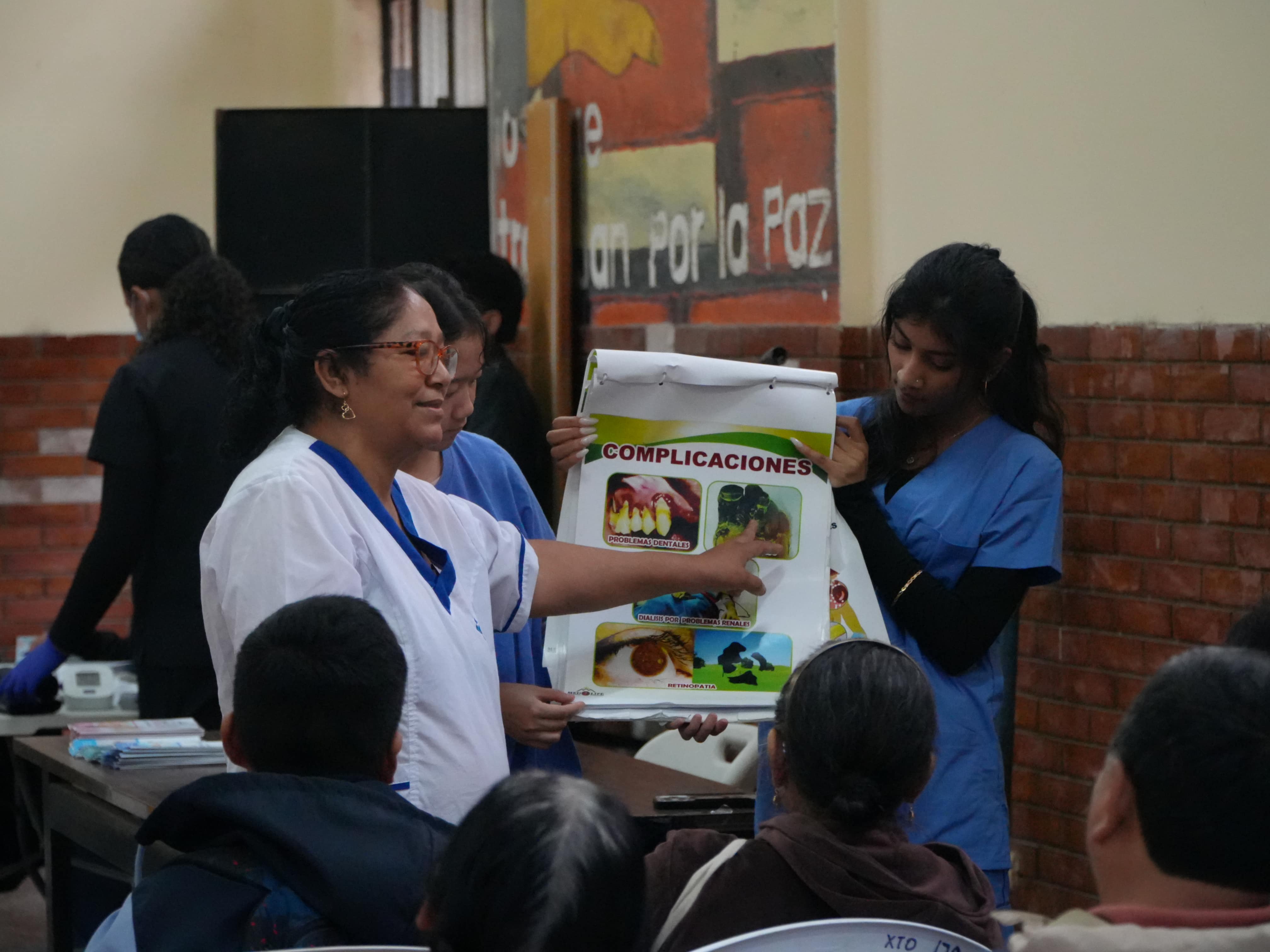
Invest In A Complete Educational Journey
The success of the Delaware Model proves that students do not just want the shortest possible experience; they want the most meaningful experience they can justify with their time. Utilizing university spring/winter breaks or intensive academic breaks for an extended service learning immersion experience can turn international travel into a comprehensive educational milestone.
By combining clinical service hours, sustainable development projects, and cultural immersion, you can gain the practical perspective needed to become a thoughtful, grounded advocate for health equity.
To learn how you can book an immersive service learning trip similar to the Delaware model, fill out the form below or download our brochure today!