When pre-health students consider getting involved in international field education experiences, the standard model often follows a familiar pattern: sign up for a trip, complete basic pre-departure logistics, then travel. While short-term trips certainly provide valuable initial exposure, treating international service as an isolated event misses a profound educational opportunity for once participants have returned home.
To deepen the impact of experiential learning, student leaders developed a rigorous approach known as the Berkeley Model. By pairing semester-long academic preparation with an extended field experience, Berkeley MEDLIFE established a new standard for ethical, immersive global health education.
Beyond the Stand-Alone Service Trip
The central philosophy of the Berkeley Model is quite straightforward: an international service trip should not be the entire educational experience, but rather the practical field component of a larger learning curriculum. Instead of treating travel as a stand-alone activity, this approach embeds field work into a structured academic course.
Students spend a full semester exploring global health sustainability, studying the social determinants of health, and practicing conversational and medical Spanish. Rather than arriving in host communities with unexamined assumptions, participants are part of rigorous discussions around the ethics of international outreach, power structures, and primary prevention. This intentional preparation ensures that students arrive on the ground with the context required to observe clinical care respectfully.
Learning Practical Skills and Cultural Humility
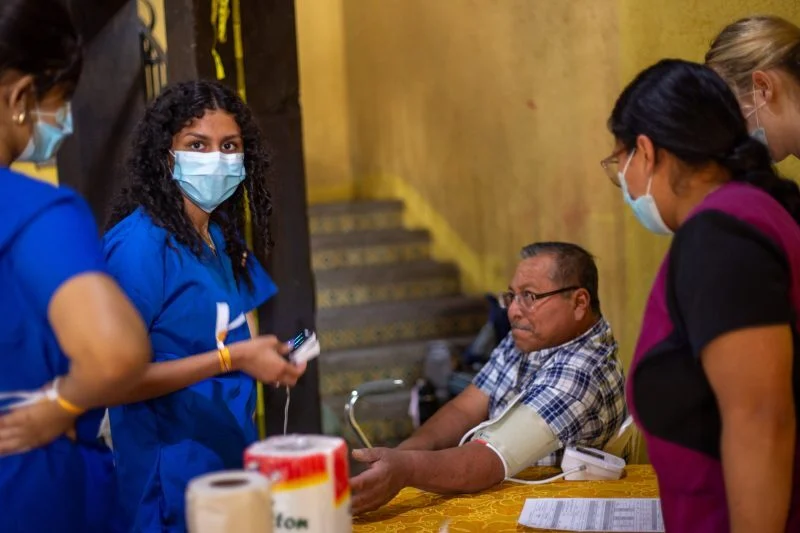
Academic preparation for service also extends far beyond lectures and readings. Through clinical station simulations and role-playing exercises, students get to practice vital signs collection, station workflows, and patient interactions long before departure. These practical rehearsals build clinical familiarity while reinforcing role boundaries and patient dignity while working within culturally diverse areas.
Emphasizing cultural humility is also central to this framework. Through the course developed by Berkeley MEDLIFE, students learn to view international outreach through a lens of continuous self-reflection. They study how geography, infrastructure, and regional history dictate healthcare access, requiring them to recognize that local professionals and community leaders hold the true expertise. By testing language skills and practical knowledge through hands-on scenarios, participants learn to act as supportive allies under the direction of regional clinicians.
Why a Two-Week Field Experience Works
Transitioning from classroom preparation to field observation requires adequate time to process complex realities. While a single week introduces participants to clinical routines, a two-week Service Learning Trip allows students to observe care delivery across distinct geographic and economic settings.
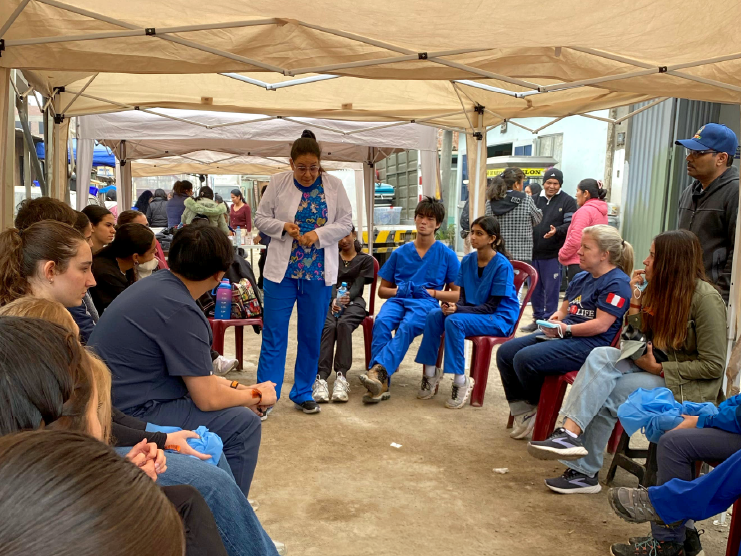
The extended duration enables students to compare health access in urban informal settlements with remote rural villages, observe community-built infrastructure projects, and participate in daily facilitated reflection on what they witnessed and how it relates to the broader subjects like social determinants of health. This comparative lens turns raw observation into analytical understanding, ensuring that the field work directly reinforces the classroom concepts that students have been familiarizing themselves with.
Setting a New Standard for Global Health Education
By combining structured coursework, language practice, clinical simulation, and two full weeks of field observation, Berkeley MEDLIFE has created a best-practice framework for experiential education and international service work that is changing the game.
This integrated model proves that thorough academic preparation and extended field immersion create a far more complete educational experience for students interested in poverty reduction and access to care in foreign countries. Equipping tomorrow’s healthcare leaders with historical context, cultural humility, and a practical perspective ensures that global health education serves both student growth and the long-term health equity of the communities being served.
To learn more about the Berkeley Method and how you can get involved in this kind of immersive service learning with MEDLIFE, fill out the form below or download our brochure today!