In lecture halls and seminar rooms, pre-health and public health coursework introduces students to the concepts of epidemiology, social determinants of health, and international care models. While analyzing case studies and reading textbooks provides a solid academic foundation, traditional classroom learning can only take students so far. Grasping the human reality of healthcare delivery requires seeing how systemic factors operate in everyday life. For students seeking to connect classroom concepts with real-world practice, global health experiential learning through MEDLIFE serves as an essential bridge between academic theory and field-based observation.

Grounding Academic Concepts Within Real-World Context
Studying global health in a classroom often focuses on data analysis, policy frameworks, and historical trends. These concepts are vital, but they remain abstract until observed on the ground. Participating in a MEDLIFE Service Learning Trip allows students to witness how geographic barriers, infrastructure gaps, and economic constraints directly impact patient access to clinical care within low-income and medically underserved areas across Latin America and Africa.
When participants assist regional medical staff in mobile health clinics, abstract concepts become immediate. Observing how local clinicians manage supply limitations or how terrain affects emergency transport transforms theoretical health disparities into concrete understanding. This direct exposure grounds what was learned in the classroom, enabling future health professionals to analyze healthcare challenges with realistic context.
Integrating Local Action with International Immersion
MEDLIFE structures its educational model to ensure that learning occurs both on home campuses and in partner communities. Rather than treating field programs as isolated events, MEDLIFE chapters involve students in continuous public health education, fundraising, and local neighborhood outreach throughout the academic year.
This dual approach ensures that global health experiential learning begins long before students travel abroad and long after. On campus, members organize educational workshops and support regional free clinics, developing foundational advocacy skills. When students participate in field programs in Latin America or Africa, they arrive prepared to observe, ask thoughtful questions, and respect host community leadership.
Learning Through Collaboration and Infrastructure Projects
Field-based learning also can extend beyond mobile clinics to encompass primary prevention and infrastructure development. MEDLIFE coordinates community-led construction projects, such as building concrete staircases, installing clean water systems, and constructing sanitation facilities, that address the environmental causes of illness.
Working alongside local engineers and residents demonstrates that public health relies on civil infrastructure as much as clinical medicine. Observing these projects in real time allows students to connect housing conditions, sanitation access, and injury prevention directly to patient health outcomes. This multi-faceted approach reinforces that sustainable health equity requires structural investment.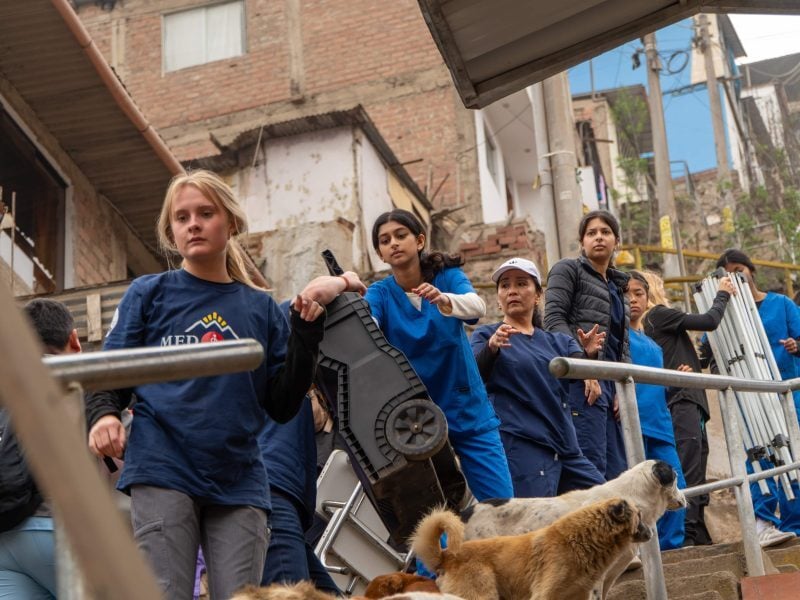
Preparing Grounded, Adaptable Future Leaders
Academic preparation and practical field exposure should complement each other. Through structured global health experiential learning, MEDLIFE encourages students to evaluate healthcare systems critically, practice cultural humility, and recognize the expertise held by local communities.
Stepping beyond traditional classrooms allows future doctors, nurses, epidemiologists, and policy advocates to build the analytical rigor and empathy required for successful careers.
To learn how you can get started with MEDLIFE today, fill out the form below or download our brochure!