We always love hearing from former MEDLIFErs about how their time abroad has influenced their educational and career path. For many of our Service Learning Trip participants, their first time witnessing a lack of access to vital resources on a mass scale is when they visit our partner communities. Understanding how an underserved community functions can be helpful for future medical professionals. However, standing in one, witnessing, and serving is what creates a truly transformative experience that sticks with a medical professional long after they’ve left.
We had the pleasure of receiving a written testimonial from a former SLT participant who is currently studying at the Geisinger Commonwealth School of Medicine and is a Medical Laboratory Assistant, Madison Brooks. Madison shared some insights about her personal experience working with MEDLIFE in Riobamba, and how things like medical innovation and working with marginalized communities can make a true difference. Keep reading to learn more!

QUESTION 1: Did MEDLIFE affect the way you see the world, underserved communities, or your role within them? If yes, how? If not, what shaped your perspective instead?
Madison: MEDLIFE profoundly influenced the way I see underserved communities and my role within them. You truly cannot understand your own privilege until you witness life without basic access to care. During my trip to Riobamba, Ecuador, I realized how automatic it was for me to grab ibuprofen for a headache, while many people were pushing through toothaches or chronic pain simply because they had no other option. That experience grounded me in the reality of what it means to live with limited resources, and I have since learned that you do not have to travel across the globe to see it. Even now, as a medical student in a United States suburb, I meet patients every week who lack access to the resources they need.
MEDLIFE shaped how I approach all patients by recognizing how the social determinants of health can influence their medical care. Instead of assuming someone is “noncompliant,” I ask whether they can afford their medications, whether they understand their condition, or whether other barriers exist. MEDLIFE taught me to lead with empathy and curiosity rather than judgment and to consider all factors that affect health, not just diagnoses and treatments.

QUESTION 2: Did MEDLIFE help you build any skills, clarity, or direction that you’re carrying forward today? If yes, what specifically? If not, what experiences were most formative for you?
Madison: MEDLIFE also helped me see how important medical innovation is for making care more accessible. During my trip to Riobamba, I assisted a physician in collecting Pap smears using limited supplies and resources. Seeing that firsthand made me realize how different medicine looks when technology and infrastructure are not readily available. Now, I am inspired by innovations like at-home cervical cancer and STI screening kits, which can remove major barriers for people who cannot easily take time off work, find childcare, or get transportation to an appointment. That early experience helped shape the kind of physician I want to be, someone focused on improving medicine in ways that make it safer, more accessible, and better for everyone, regardless of background or income.
QUESTION 3: Looking ahead, do you see yourself serving marginalized or underserved communities in some way? If so, how do you imagine doing that? If not, what feels most meaningful to you now?
Madison: I absolutely see myself continuing to work with underserved communities even as I pursue pathology residency, a field with less direct patient contact. I hope to contribute through research and innovation that improve access to diagnostics and help make care more broadly equitable. Many people do not realize that pathology also plays a role in global health, and some residency programs offer opportunities to work abroad with resource-limited communities to provide education, research, and clinical diagnostic support.
MEDLIFE was one of the first experiences that showed me how complex medicine becomes when poverty and limited resources are present. It built a foundation of empathy and understanding that has stayed with me throughout medical school, and I know it will continue to guide my career.
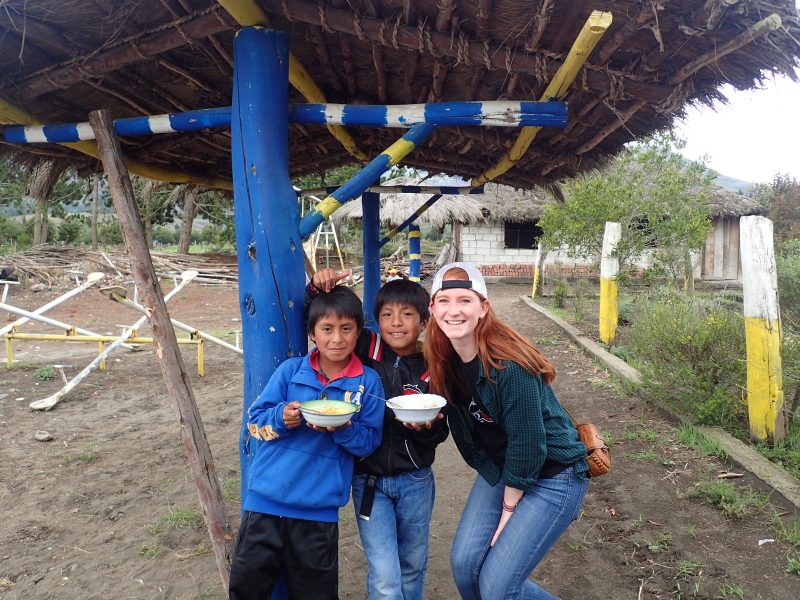
It’s always encouraging to see that MEDLIFE has left a lasting impact on not only the communities we serve but the people who participate in our SLTs. Thank you Madison for the insightful and compelling words about your time in Riobamba. We know you’ll continue to keep the MEDLIFE mission alive in everything you do going forward!
To learn how you can work alongside medical professionals in underserved communities across Latin America and Africa to assist in healthcare, education, and infrastructure outreach, fill out the interest form below or download our free brochure today!