
When drafting a med school application, students often wonder how reviewers evaluate experiences completed abroad. Does traveling to assist underserved communities demonstrate genuine commitment, or is it viewed as a generic resume padder? Admissions officers review thousands of applications annually, and their view of international volunteer work depends entirely on the depth, ethics, and long-term reflection behind your experience. Rather than treating travel as a golden ticket, committees evaluate how your time in the field shaped your understanding of health equity and clinical realities.
Here is what admissions teams actually look for when evaluating your experience abroad.

Sustainable International Engagement vs. “Voluntourism”
Admissions committees are adept at spotting superficial volunteer experiences. If an applicant spends a single week taking photos without meaningful community context, reviewers may question their motivations.
Conversely, when international volunteer work is structured around long-term, locally led initiatives, it highlights a mature understanding of global health and the social determinants of health. Committees want to see that you participated in ethical programs where local doctors, nurses, and leaders direct the care. Demonstrating that you listened to and learned about community needs, rather than imposing outside solutions, signals the humility required of future healthcare providers.
Quality of Reflection and Clinical Context
While meeting general med school requirements often includes logging clinical time and community service, numbers alone do not guarantee an acceptance letter. A student who can articulate the systemic barriers facing underserved or rural patients will stand out far more than someone who simply lists a high volume of clinic duties.
When writing your application essays or answering interview questions, focus on:
-
Structural Health Inequities: How geography, clean water access, and economic factors dictate patient outcomes.
-
Cultural Competency: How navigating language barriers and local customs improved your patient communication skills.
-
Collaborative Care: What you learned by observing local healthcare teams manage complex cases with limited resources.
Hours vs. Impact: Finding the Balance
Pre-med students often want to know how many hours of volunteering for med school are required to be competitive against other candidates. While most successful applicants aim for 100 to 150+ hours of service, quality and insight always supersede quantity.
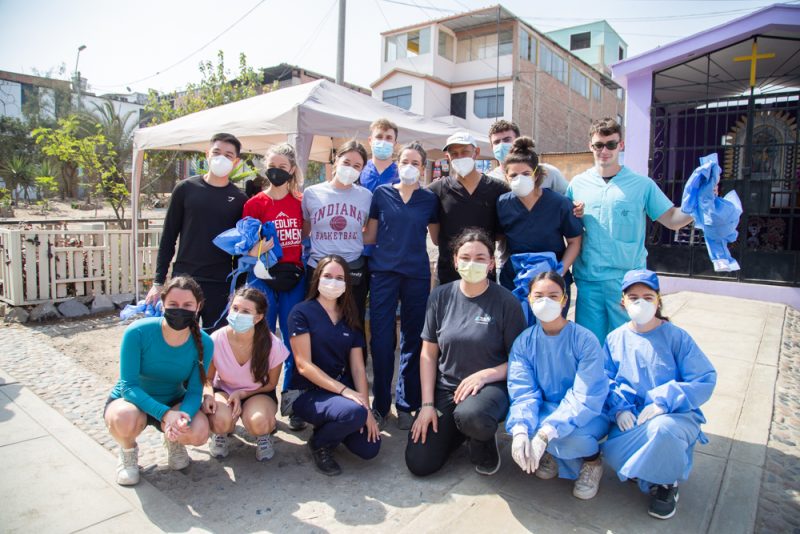
Participating in a high-impact, week-long Service Learning Trip can be a powerful catalyst for your pre-health journey. However, admissions officers prefer to see that experience integrated into a broader pattern of service. Pairing your time abroad with local volunteering in your own community proves that your dedication to service is consistent, not seasonal.
Ultimately, international volunteer work is an invaluable addition to your application when approached with intentionality and ethical awareness. By focusing on sustainable partnership, active listening, and thoughtful reflection, you can turn your time in the field into a compelling story that resonates with any admissions committee.
To learn how you can volunteer ethically in Latin America or Africa with MEDLIFE, fill out the interest form below or download our brochure today!