Many undergraduate students today are pursuing careers surrounding public health and dietetics. This is a wonderful pursuit for anyone passionate about nutrition and diet science. Classroom lectures, discussions, and textbooks offer vital foundational theory for students. However, applying nutritional biochemistry and community assessment principles in real-world settings is what transforms the way students understand health equity.
Joining a MEDLIFE Service Learning Trip (SLT) provides an immersive environment where studying nutrition and food science moves from textbook diagrams directly into community-led mobile health clinics in low-income areas across Latin America and Africa. By observing how socioeconomic factors, water security, and geography dictate dietary access, students gain the practical perspective needed to become empathetic, effective future dietitians and public health professionals.

1. Witnessing Structural Determinants of Food Security
In traditional academic settings, food security is often discussed in terms of national statistics or dietary guidelines. On an SLT, students get to witness firsthand and understand how infrastructure directly impacts nutritional status.
- Geographic Isolation: Traveling into informal hillside settlements reveals how steep, unpaved terrain prevents fresh produce trucks from reaching local markets, leaving families reliant on shelf-stable processed goods.
- Water Scarcity and Nutrient Absorption: Students learn that malnutrition is rarely caused by food availability alone. A lack of clean drinking water leads to chronic gastrointestinal infections, preventing the body from absorbing essential micronutrients.
- Economic Reality: Observing daily household budgets reinforces why standard western dietary advice must be adapted to fit local economic conditions and staple ingredients.
2. Practical Screening Skills in Mobile Triage Stations
Participating in nutrition volunteer opportunities abroad allows students to shadow local health professionals and assist with essential growth monitoring protocols.
Working alongside clinic staff, students observe mid-upper arm circumference (MUAC) measurements, infant weighing, and hemoglobin screenings used to detect acute anemia. Seeing these rapid assessment tools deployed across high patient volumes demonstrates how clinical nutrition interventions are prioritized under real-world resource constraints.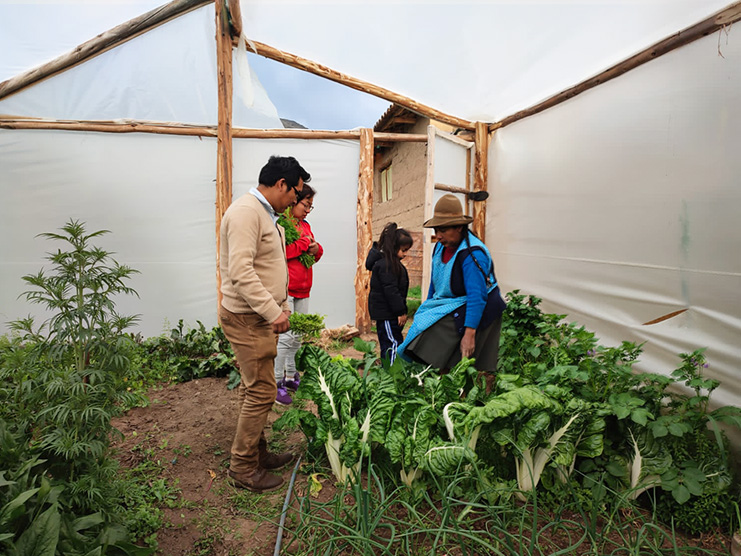
3. Practicing Cultural Humility in Dietary Counseling
Recommending dietary changes requires a deep understanding of local culture, traditional cooking practices, and native crops. On a Service Learning Trip, students learn that effective dietary counseling is a collaborative dialogue rather than a top-down lecture.
Participating in nutrition volunteer programs teaches students to appreciate the nutritional value of native Andean grains, legumes, and local produce. Rather than attempting to replace traditional diets, students observe how local practitioners craft culturally respectful recommendations that build upon affordable, locally available foods.
4. Translating Field Experience into Career Growth
Hands-on field experience offers a distinct advantage when applying for competitive dietetic internships, graduate programs, or public health roles. Admissions committees and internship directors look for candidates who demonstrate adaptability, interprofessional teamwork, and a nuanced grasp of health disparities.
Documenting field observations, community health surveys, and clinical exposure gives students compelling, real-world examples to feature in their personal statements and professional interviews.
Expand Your Perspective Beyond the Classroom
Stepping out of the lab and into community health fieldwork equips students with a holistic understanding of global health equity. Integrating practical field experience into your degree in nutrition and food science ensures you graduate prepared to drive meaningful change in public health, clinical dietetics, and community nutrition.
To learn more about how you can participate in a MEDLIFE Service Learning Trip in Latin America or Africa, fill out the interest form below or download our free brochure today!