Ask any bilingual doctor, and they will tell you that passing a college Spanish exam is entirely different from explaining a dosage schedule to a worried patent in a bustling community clinic. Textbook grammar and pre-packaged vocabulary lists simply cannot prepare you for the raw, fast-paced environment of medicine. If you want to connect with patients in Spanish and provide safe, effective care, you need an environment where you can practice clinical communication in real-time. Joining a medical spanish immersion program with MEDLIFE takes you past typical memorization and places you directly alongside native, bilingual healthcare professionals who are actively working to bridge systemic communication gaps in underserved regions.

Beyond Passive Shadowing
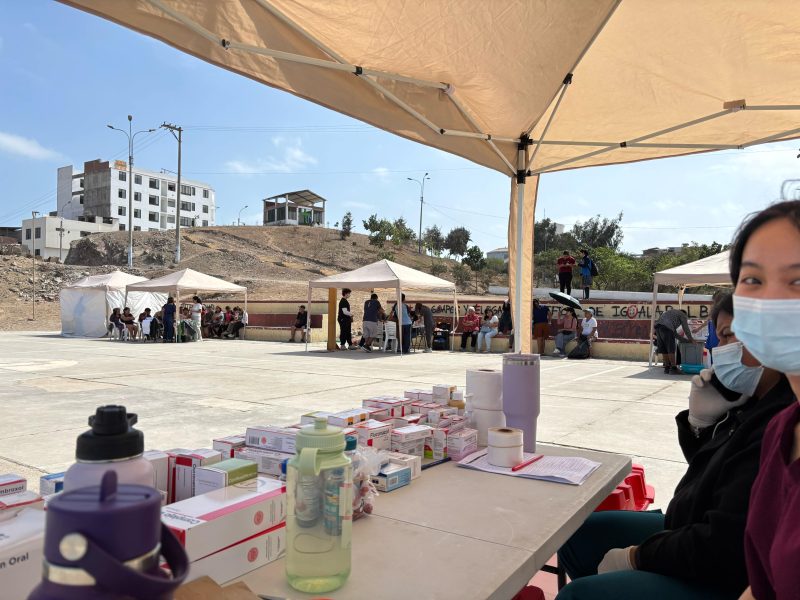
For students searching for pre med volunteer opportunities, shadowing in a hospital often means standing in the back of the room or silently watching a computer screen. MEDLIFE changes this dynamic by placing you directly within a mobile clinic in a medically underserved community.
Under the close supervision of local doctors, you will practice welcoming patients, guiding them through triage and taking their vitals, learning how to document symptoms and take basic medical histories, shadow physicians through appointments and certain procedures, and disperse medicine in the pharmacy station. This hands-on approach teaches you that basic Spanish comprehension is more than just a tool for translation, it is a critical public health intervention that reduces patient anxiety, builds clinical trust, and prevents costly diagnostic errors.

Overcoming language Barriers in the Field
When you volunteer in Latin America with MEDLIFE, you quickly realize that clinical terms vary wildly across regional dialects. A textbook might teach you one standard word for an illness, but families in the high-altitude Andes of Peru or rural coastal communities in Ecuador and Costa Rica might use local idioms or reference traditional ancestral medicine.
This is where true medical Spanish immersion happens. By listening to patients describe their ailments in their own words, you learn to:
-
Adapt your vocabulary to match the patient’s local context.
-
Ask respectful, open-ended follow-up questions about their symptoms.
-
Explain preventative care plans in an accessible way that respects, rather than overrides, local traditions.
Through these kinds of interactions, you are not just translating words, you are actively practicing cultural humility.
Building a Lifelong Professional Skill
Ultimately, the goal of a structured medical Spanish immersion experience is to transform you into a more empathetic, communicative healthcare provider. The lessons you learn in the field will follow you throughout your academic and professional journey.
When you return home, you will carry a profound, practical understanding of how language barriers directly drive health disparities in local communities. This perspective will not only make your medical school applications stand out, but it will also shape how you listen to and care for diverse patient populations throughout your entire career.
If you are ready to challenge yourself, build real clinical fluency, and make an ethical impact on global health equity, fill out the interest form below or download our brochure today!