Whether you’re preparing for a MEDLIFE Service Learning Trip or planning your own route, a few facts about South America will help you make sense of what you see, hear and taste once you land. Here are 12 worth knowing, plus what they mean for your trip.
South America at a glance
South America is the fourth-largest continent, with 12 independent countries and a few overseas territories. It’s home to the Andes, most of the Amazon rainforest and some of the driest and highest places on Earth. Spanish and Portuguese are the most spoken languages, but millions of people also speak Indigenous languages like Quechua and Guaraní.
12 interesting facts about South America
1. It has 12 countries
Argentina, Bolivia, Brazil, Chile, Colombia, Ecuador, Guyana, Paraguay, Peru, Suriname, Uruguay and Venezuela. French Guiana is also on the continent, but it’s part of France.
2. Brazil covers almost half of it
South America is the fourth-largest continent, and Brazil alone takes up close to half of its land.
3. The Andes are the longest mountain range on land
They run about 7,000 km (4,300 miles) along the western edge of the continent, through seven countries.
4. It has the highest point outside Asia
Mount Aconcagua in Argentina rises to 6,961 m (22,838 ft). Argentina also holds the lowest point in the Western and Southern Hemispheres: Laguna del Carbón, 105 m (344 ft) below sea level.
5. The Amazon is the world’s largest rainforest
It spreads across eight countries and French Guiana, with the largest share in Brazil. You may have heard that it produces 20% of the world’s oxygen. That’s a myth: scientists estimate its net contribution is close to zero, because the forest uses almost as much oxygen as it makes (National Geographic). Its real value is in the carbon it stores, the rain it creates and the life it holds.
6. The Atacama is one of the driest places on Earth
This desert in northern Chile is among the driest non-polar places in the world.
7. The world’s tallest waterfall is in Venezuela
Angel Falls drops 979 m (3,212 ft), the tallest uninterrupted waterfall on the planet.
8. Lake Titicaca sits about 3,800 m high
Shared by Peru and Bolivia, it’s often called the highest navigable lake in the world.
9. It’s a multilingual continent
Spanish is the most widely spoken language. Brazil speaks Portuguese, Suriname Dutch and Guyana English. Indigenous languages are very much alive: Quechua has official status in Peru and Bolivia, and Guaraní is an official language of Paraguay alongside Spanish. To understand how Spanish became so dominant, read our post on why Spanish is spoken in Central and South America.
10. Peru was the heart of the Inca Empire
The Incas built the largest empire in the Americas before the Spanish arrived, with Cusco as its capital. Their best-known site, Machu Picchu, is a 15th-century Inca citadel high in the Andes. Their legacy lives on in Peru’s languages, food and traditions. Find more in our fun facts about Peru.
11. Ecuador is named after the equator
The equator runs through the country, which also governs the Galápagos Islands and uses the U.S. dollar. For greetings and customs there, see our guide to Ecuador.
12. Seasons are flipped south of the equator
Most of the continent lies in the Southern Hemisphere, so in places like Argentina and Chile summer runs from December to February. In the tropical Andes, seasons are marked more by rain than by temperature.
What these facts mean for your trip
- Altitude is real. Cusco sits at about 3,400 m (11,150 ft) and Riobamba at about 2,750 m (9,000 ft), so take your first days slowly and drink plenty of water.
- A few words go a long way. Learn some basic Spanish and the local phrases and hand gestures before you go.
- Talk to a travel clinic about recommended vaccines. Our post on immunizations for Peru is a good place to start.
- Learn the history behind what you’ll see, including colonialism’s impact on Indigenous cultures.
- Check our guide to the safest places in South America for student volunteer trips.
Heading to Costa Rica too?
Costa Rica is in Central America, not South America, but many MEDLIFE volunteers travel there too. You’ll hear “Pura Vida” everywhere; find out what it means in our Pura Vida guide.
See South America with MEDLIFE
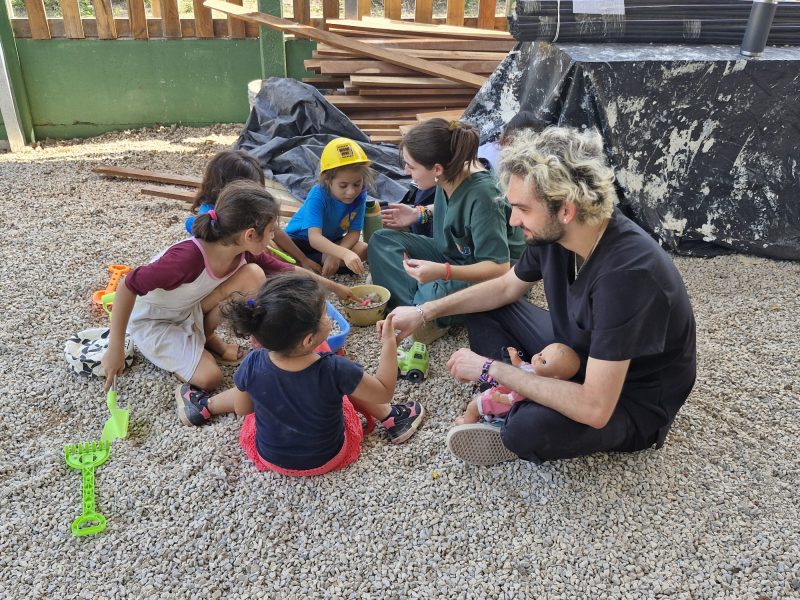
On a MEDLIFE Service Learning Trip, you get to know South America by working with partner communities in Peru and Ecuador on mobile clinics and community projects, alongside local health professionals. Many trips also leave time to explore, like a Galápagos tour or a Machu Picchu trip with Goodlife Expeditions.
Download our free brochure or fill out the short form below to learn more.