When the topic of global health outreach is being discussed, the immediate focus often lands on medical clinics, prescription medications, and clinical treatments. While all of these are vital in the pursuit of health equity, it’s important to understand that true health begins long before a patient ever sees a doctor. In underserved regions across Latin America and Africa, health equity is deeply intertwined with the surrounding ecosystem and living environments of patients. Prioritizing environmental conservation is one of the most effective, long-term strategies for preventing disease outbreaks and protecting vulnerable populations in low-income communities.
By understanding how ecological disruption fuels illness, we can work to build community-led solutions that address health inequality at its very roots.

The Connection Between Ecosystem Health and Public Health
In informal settlements and rural areas, limited access to waste management and clean water infrastructure creates ideal conditions for disease vectors. Unmanaged waste accumulates, stagnating runoff water and creating breeding grounds for mosquitoes that carry vector-borne illnesses like Dengue, Zika, and Malaria. Similarly, deforestation and soil erosion contaminate natural water sources, leading to outbreaks of cholera, parasites, and severe gastrointestinal infections.
This is why local environmental conservation acts as a vital line of medical defense, especially for those living in medically underserved areas. Protecting watersheds, reforesting unstable hillsides, and establishing proper sanitation infrastructure directly stops disease from multiplying. By working to preserve the surrounding environments of our partner communities, we aim to directly decrease waterborne pathogens and vector-borne transmissions, reducing preventable hospitalizations before they even occur.
Sustainable Development as a Public Health Strategy
To understand how ecological care creates positive health outcomes, it helps to first understand what sustainable development is. In a global health context, it means creating infrastructure and systems that meet a community’s present needs without compromising the natural environment or resources.
At MEDLIFE, we work towards sustainable development in the form of community-driven infrastructure projects, including:
-
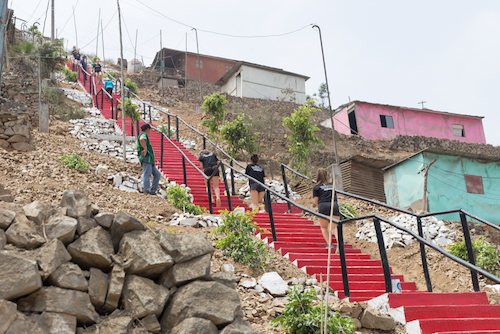
Staircases on Unstable Slopes: Building secure pathways prevents soil erosion and landslides while also creating easier access to hospitals and clinics for populations living in highlands like those in Lima, Peru.
-
Water & Sanitation Systems: Establishing clean water access and waste management prevents sewage from contaminating soil and local water resources.
-
Community Education: Training local leaders on waste sorting and pollution reduction ensures ecological practices continue even after staff and Service Learning Trip participants leave.
By addressing root environmental determinants, health improvements become permanent rather than temporary fixes.

The Role of Ethical Volunteering in Ecological Health
Achieving long-term global health development requires moving beyond short-term “band-aid” remedies. Participating in ethical volunteering means supporting local communities in building self-sustaining systems rather than imposing outside solutions. When international volunteers participate in MEDLIFE’s Service Learning Trips, they work alongside local residents on infrastructure projects designed and led by community leaders who know their environment best.
Participants assist in planting trees to stabilize hillsides, construction of sanitation facilities, and supporting mobile clinics operated by local medical professionals. Our holistic approach aims to ensure that healthcare outreach and environmental integrity are supported simultaneously in our partner communities.
Through dedicated environmental conservation, we can break the cycle of preventable disease, build climate-resilient infrastructure, and ensure that low-income communities thrive for generations to come.
Interested in how you can assist low-income communities abroad? Explore how you can join a MEDLIFE Service Learning Trip to Peru, Ecuador, Costa Rica, Guatemala, or Tanzania by filling out the interest form below or downloading our brochure today!