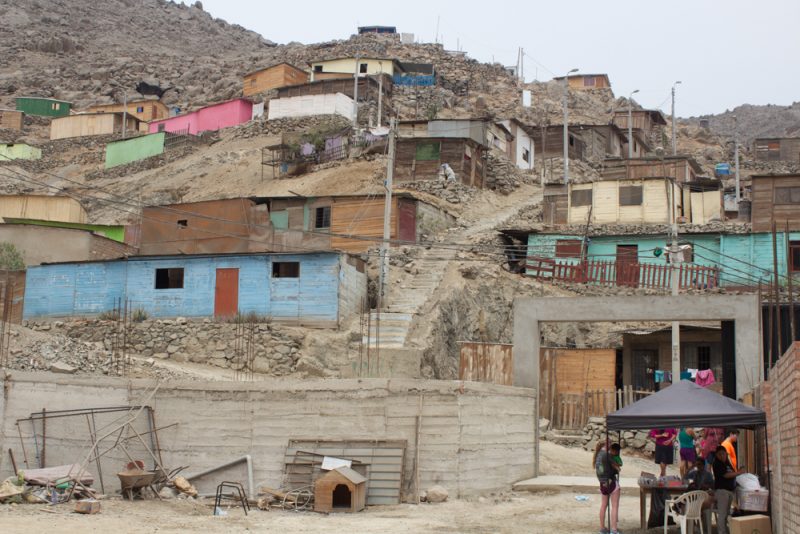
Textbook theories regarding international public policy often fall short when they are applied to real-world global health delivery. To understand how geographic isolation, economic disparity, and structural bottlenecks truly impact patient care, health systems are best studied from the ground up. In theory, a system built on decentralized healthcare sounds like an ideal mechanism for distributing medical resources efficiently across diverse regions. However, traveling to the pueblos jóvenes (informal settlements) sprawling across the desert hillsides of Lima reveals a massive friction point between legislative design and on-the-ground reality. By shifting the burden of medical administration down to smaller municipal frameworks, structural gaps are frequently exposed, leaving vulnerable populations isolated from the very networks designed to protect them.
The Systemic Realities
Many global health researchers enter the field assuming that medical crises in developing nations stem strictly from a shortage of physicians or medication. When we shift focus to a living, breathing landscape like public health in Peru, it quickly changes that narrow perspective.
Under Peru’s current administrative framework, the responsibility for managing local clinics and allocating basic medical resources is distributed across regional and municipal jurisdictions. While this localized, decentralized healthcare model functions adequately in urban commercial centers, it completely fails in reaching informal settlements. Because these hillside communities lack official municipal zoning and legal land titles, local authorities rarely allocate the funding required to staff or supply nearby medical posts. Without localized government support, families face long journeys down steep, unpaved terrain just to reach an urban facility, rendering basic preventive medicine virtually inaccessible for thousands of residents.
Bridging the Disconnect with Sustainable Agility
These communities are proof that establishing true equity in healthcare requires a lot more than just passing national mandates. They require a continuous, adaptable system that actively bridges bureaucratic gaps. When centralized government safety nets stall, community-led models must step in to establish stable lifelines.
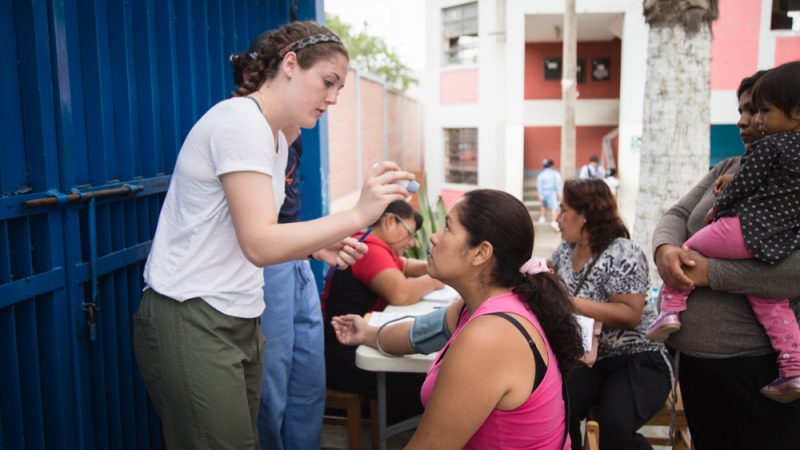
This is where field-based interventions work to rewrite the operational blueprint. Rather than forcing isolated families to navigate a broken regional transit loop, structured mobile clinics function as a highly responsive layer of decentralized healthcare. By transporting fully equipped pharmacies, diagnostic tools, dental stations, and local medical professionals directly up the steep ridges, these mobile operations circumvent the lack of permanent local infrastructure.
Turning Short-Term Field Data Into Long-Term Systems
Ultimately, the goal of international development is to turn supply permanent structural support. One of the ways this occurs is when field data connects back to permanent medical networks. Every patient chart recorded during a MEDLIFE mobile clinic goes directly into a year-round tracking system managed entirely by local professionals. This is how we ensure support doesn’t end once a patient has left the clinic. Follow-up care is a vital part of our patient support system to help bridge access to things like surgery, medication, hospitalization, and financial support.
Experiencing this systemic complexity firsthand provides future policymakers and healthcare administrators with the sophisticated, raw perspective needed for leadership roles. If you are ready to look past surface-level observations and learn about the true mechanics of international policy, fill out the interest form below or download our brochure to learn how you can register for a Service Learning Trip in Latin America or Africa!