When one pictures improving community health services in low-income neighborhoods, rarely do concrete steps first come to mind. But in the hillside communities on the outskirts of Lima, Peru, a sturdy staircase can be just as powerful as a prescription.
The Hidden Health Risk Beneath Your Feet
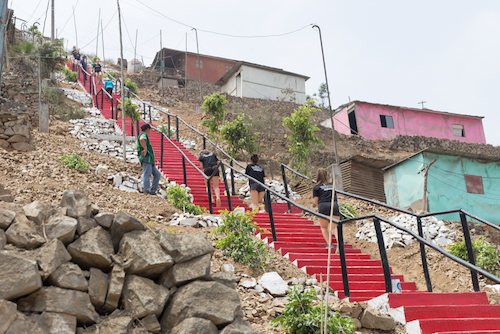
Lima’s peripheral districts are home to thousands of families and individuals who have built lives on steep, sandy hillsides with little to no formal infrastructure. Getting from home to the street below isn’t just inconvenient, it’s highly dangerous. Unpaved slopes turn slippery in Lima’s humid winters. There are no handrails, no even surfaces, and no safe path for the elderly, children, or anyone carrying a heavy load.
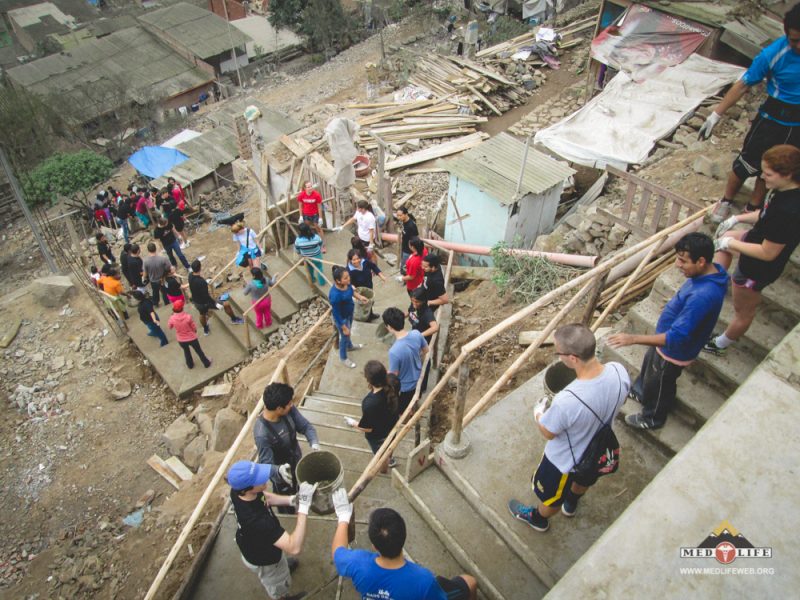
This is why MEDLIFE’s staircase construction program began. Our story starts with a patient named Chais Pipa, who was six months pregnant when she slipped and fell on the hillside near her home in Pamplona Alta. The fall triggered early labor. Her daughter Eiselith was born with heart and lung complications that required expensive, difficult-to-access treatment, a devastating outcome that might have been avoided if the path had simply been safe to walk.
Infrastructure as a barrier to healthcare
Physical access is one of the most overlooked barriers to healthcare in urban low-income communities. When a parent can’t safely carry a sick child downhill to catch a bus to the clinic, they delay the visit. When a pregnant woman knows the path could cause a fall, she hesitates to attend prenatal check-ups. When an elderly patient with limited mobility lives at the top of a treacherous slope, follow-up care after a mobile clinic visit becomes nearly impossible.
At MEDLIFE, we recognized early that providing medical care at a clinic is only part of the solution. If the physical environment makes it unsafe to reach or return from care, the impact of that care is cut short.
What a staircase actually changes
A concrete staircase does more than prevent falls. It fundamentally changes what daily life is possible for a family living on a hillside. It means a mother can walk her children to school safely each morning. It means a worker can get to the bus stop without fear of injury. It means an elderly neighbor can leave the house.
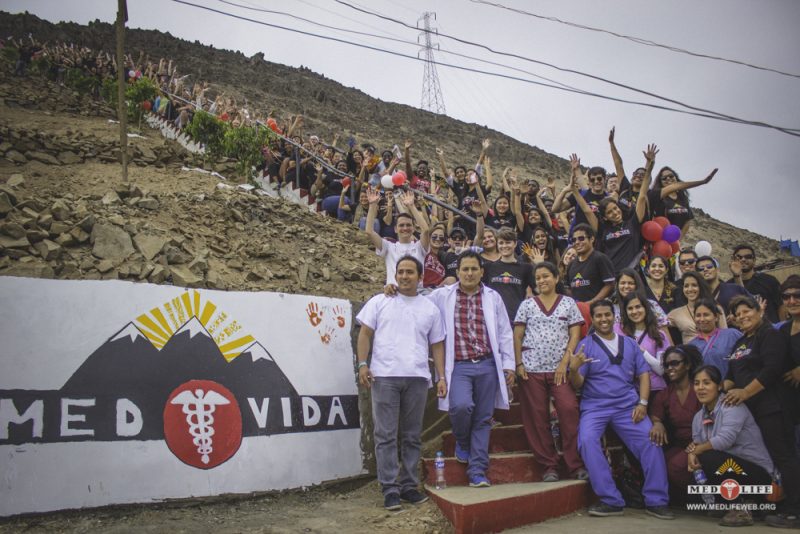
For community health services specifically, the impact compounds over time. Residents can attend mobile clinics more consistently. Healthcare workers can reach homes further up the hill to conduct follow-ups. Emergency access improves. When MEDLIFE visits a community after a staircase is built, attendance at health workshops and clinic days increases, not because people care more, but because getting there is no longer a risk.
Development and Healthcare Go Hand-In-Hand
Our staircase construction programs reflect a much broader truth about improving community health services in places like Lima: health outcomes can’t improve in isolation from the physical environment people live in. Poverty isn’t just a lack of money, it fundamentally shapes the safety of the ground beneath your feet.
By building infrastructure hand-in-hand with local residents and community leaders, we work to address the root causes that keep people sick and disconnected from care. Each staircase is a health intervention in concrete form.
If you’d like to support our work, consider joining MEDLIFE’s Moving Mountains monthly giving program. 100% of donations go directly to projects like these, in communities that need them most.
If you’re interested in traveling abroad and working directly with our partner communities in improving access to healthcare, education, and infrastructure, consider joining a MEDLIFE Service Learning Trip. Fill out the interest form below or download our brochure to get started!