When students step into an international health setting for the first time, every observation feels heightened and deeply meaningful. Observing a mobile clinic in an underserved community in Latin America or Africa provides an unforgettable window into resource constraints, regional public health challenges, and community resilience. However, spending time in just one location can inadvertently lead to oversimplified conclusions. True clarity requires time and perspective. Embracing multi-site community-based learning allows future leaders and advocates to move beyond initial impressions by comparing realities across distinct communities and countries.
The First Site: Where Assumptions Take Root
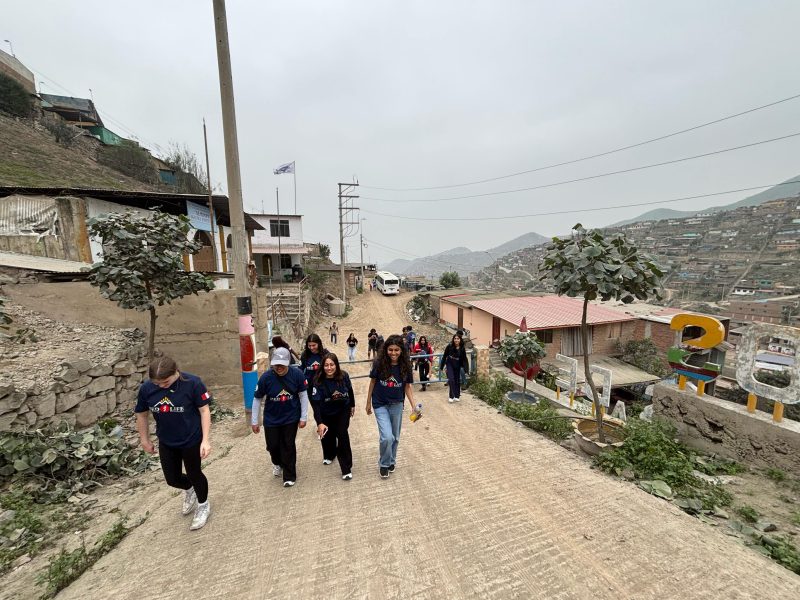
Within an initial placement, much of a volunteer’s energy goes toward orientation and absorbing immediate surroundings. When service learning trip participants observe local healthcare delivery in one specific village, they naturally use that experience as a baseline. If that community faces severe water scarcity or geographical isolation, it is easy to assume that those exact conditions define global health disparities as a whole.
This first exposure creates a strong mental model. Students formulate theories about patient behaviors, regional care barriers, and local needs. While these observations are entirely valid for that specific environment, treating them as universal truths can create a flattened narrative. A single community tells an essential story, but it represents only one perspective within a complex regional ecosystem.
The Second Site: Challenging Premature Conclusions
Stepping into a second partner community, or traveling across international borders to a new country, fundamentally changes the learning process. The power of multi-site community-based learning lies in its ability to disrupt early assumptions through direct contrast.
When students observe healthcare access in a distinct geographic setting, striking differences emerge. A coastal settlement may face entirely different socio-economic obstacles than a high-altitude mountain village, just as health systems in Peru operate under different administrative frameworks than those in Ecuador or Costa Rica. Experiencing these contrasts side by side forces students to ask critical questions: Why do health outcomes differ between these regions? How do local history and infrastructure shape community priorities? This comparison proves that public health challenges are never uniform, demonstrating that effective interventions must be tailored to specific local contexts.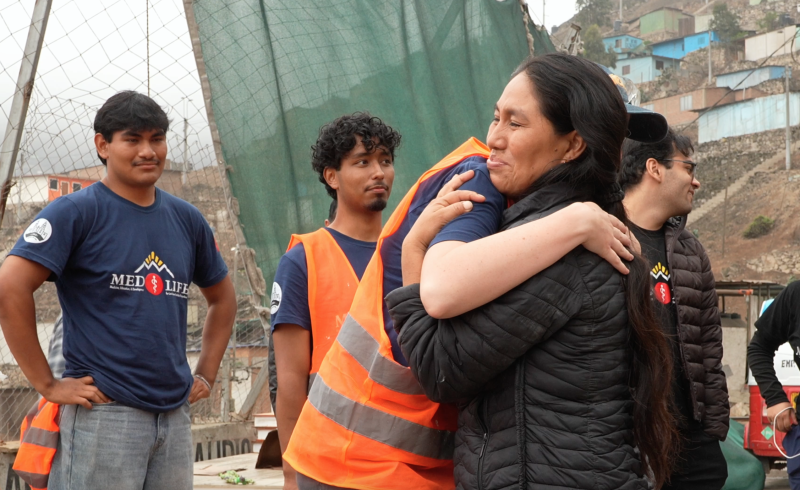
Developing Nuance and Cultural Humility
Moving across diverse communities teaches students that underserved populations are not monolithic. It dismantles rigid, one-size-fits-all frameworks and replaces them with an appreciation for diversity and complexity. Future clinicians learn that what succeeds in one community may not apply to another, reinforcing the vital necessity of listening to regional leaders who understand their own local priorities best.
This comparative approach encourages lasting cultural humility within participants. By encouraging volunteers to continuously re-evaluate their perspectives, multi-site immersion creates adaptable, critically minded advocates who approach global health with respect and analytical rigor.
Why Time and Comparison Transform Learning
Deeper understanding cannot be rushed. By dedicating adequate time to travel across distinct regions, multi-site community-based learning ensures that experiential education expands one’s worldview rather than narrowing it. Allowing a second community or country to challenge the assumptions formed by the first equips tomorrow’s healthcare leaders with the perspective, humility, and insight needed to drive meaningful health equity.
To learn how you can get started with MEDLIFE today, fill out the form below or download our brochure!