
Heading to Latin America on a MEDLIFE Service Learning Trip? A few Spanish phrases help, but people also talk with their hands, and a gesture that’s normal at home can mean something different there. This guide covers common hand gestures and their meanings, plus useful phrases and a little slang for Peru and Ecuador.
Gestures change from country to country, and Spain has its own, so treat this as a starting point and follow what locals do.
Common hand gestures in Latin America and what they mean
1. Greeting with a kiss on the cheek
In Peru and Ecuador, people often greet with a single kiss on the right cheek, especially women, and men and women once they’ve been introduced. Men usually shake hands. If you’re not sure, offer a handshake and follow the other person’s lead.
2. “Come here”: palm down
To call someone over, wave your fingers toward you with your palm facing down. The palm-up, curled index finger common in the U.S. can come across as rude.
3. “No”: a wagging finger
Wagging your index finger side to side is a clear, polite way to say “no, thanks,” for example to a street vendor.
4. “¡Ojo!”: a finger under the eye
Pulling down the skin below your eye with your index finger means “watch out” or “pay attention.”
5. “Un poquito”: thumb and index finger close together
Holding your thumb and index finger close together means “a little bit” or “just a moment.”
6. Asking for the check
In a restaurant, catch the server’s eye and mime writing in the air. They’ll bring la cuenta.
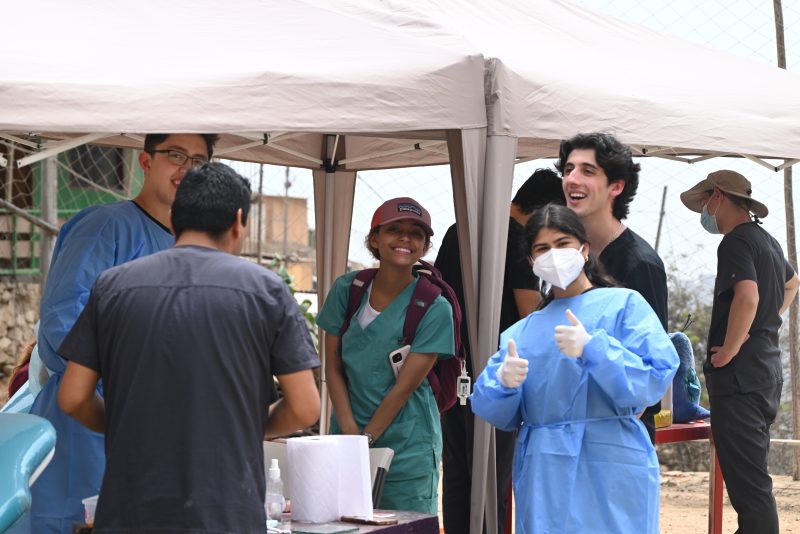
7. Thumbs up
In Peru and Ecuador, a thumbs up is widely understood as “good” or “OK.”
8. The OK sign: skip it
In some countries in the region, including Brazil, the OK sign is an insult. A thumbs up is the safer choice.

Basic Spanish phrases for your trip
Greetings
- Hola – Hello
- Buenos días / Buenas tardes / Buenas noches – Good morning / Good afternoon / Good evening
- Mucho gusto – Nice to meet you
- ¿Cómo está? – How are you? (formal) · ¿Cómo estás? (informal)
Getting around and eating
- ¿Dónde está…? – Where is…?
- ¿Cuánto cuesta? – How much does it cost?
- Necesito… – I need…
- Para llevar – To go
- La cuenta, por favor – The check, please
- ¿Habla inglés? – Do you speak English?
When you don’t understand
- ¿Cómo se dice…? – How do you say…?
- ¿Puede repetir, por favor? – Can you repeat that, please?
- Más despacio, por favor – More slowly, please
- No entiendo – I don’t understand
During clinic or project work
With patients, older people and anyone you’ve just met, use the formal usted. Switch to tú only if they do.
- ¿Cómo se llama? – What’s your name?
- ¿Le puedo ayudar? – Can I help you?
- ¿Me puede mostrar? – Can you show me?
- Párese aquí, por favor – Please stand here
- Siéntese aquí, por favor – Please sit here
- ¿Le puedo tomar la temperatura? – May I take your temperature?
- Súbase la manga, por favor – Please roll up your sleeve
For more, see our Spanish phrases for MEDLIFE mobile clinics.
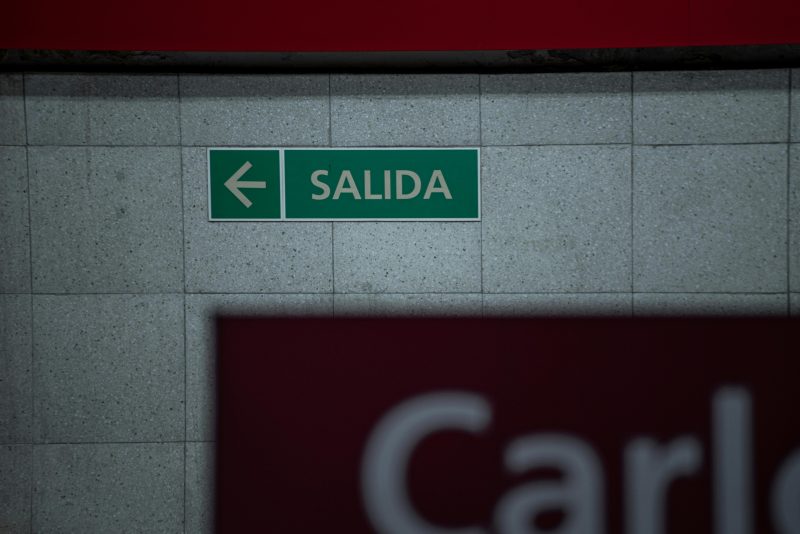
A little Spanish slang for Peru and Ecuador
Slang changes a lot from country to country, and even from city to city. A few words you’ll likely hear:
- Chévere – cool, great (Peru, Ecuador and other countries)
- Bacán – awesome (Peru)
- Chamba – work, a job (Peru)
- ¡Ya! – okay, sure (Peru)
- Ñaño / ñaña – brother / sister, also used for close friends (Ecuador)
Lime or lemon? A quick vocabulary trap
In Peru and Ecuador, limón usually means the small green lime, not the yellow lemon you may be picturing. Words like this change by country, so when in doubt, ask.
Practice your Spanish on a MEDLIFE trip
On a MEDLIFE Service Learning Trip, you’ll use these phrases every day while working with local staff and partner communities in Peru and Ecuador. Before you go, read our guides to greetings in Peru, customs in Ecuador and Spanish phrases for Peru.
Download our free brochure or fill out the short form below to learn more.
Frequently asked questions
Are hand gestures the same in every Spanish-speaking country?
No. Many overlap, but meanings shift between countries and between Latin America and Spain. Watching what locals do is the best guide.
Should I use “tú” or “usted” (you)?
Start with usted, especially with patients and older people. It’s respectful, and people will tell you if they prefer tú.
Will I only hear Spanish?
Not always. In the Andes, many people also speak Quechua. See more in our facts about South America.